
Stop Wishing, Start Living: How to Set Goals That Actually Work
Get stories like these delivered straight to your inbox
Sign up for the CultureStoke Newsletter
Ever since I published a book, people love to ask me how my sales are going. My answer is always the same: “I have no idea.”
This usually earns me a confused half-smile, like I just told a joke and they’re not sure whether to laugh. But it’s not a joke. I really don’t know. I don’t check the numbers. I don’t promote my book. I only call myself an author passively.
When someone pushes and asks why, I tell them the truth:
“My goal was to write a book, not sell a book.”
And I mean that to my core.
That single sentence is why I felt compelled to write this article, because setting the right goals, goals you can own and be proud of, is the difference between hoping to reach some finish line and building a life you’re actually proud to live.
Goal-setting is one of the most powerful tools we have. It’s how we coax ourselves out of the familiar and into our potential. But most people never take that step.

If you have ever struggled with setting goals, sticking to them, or feeling defeated by them, this article is for you. We’re going to talk about why goals matter, how to set goals that actually work, and what you can do today to stop wishing and start living.
The Why
Bottom-Line-Up-Front (BLUF): People who set clear, motivating goals consistently outperform those who set easy or vague (“do your best”) goals.
As I have grown older, I believe that, in general, the only difference between those who do and those who hope is simply the willingness to try, even in the face of potential failure. Some conditions can make things easier for some, but in general, it is those who realize that not even trying is worse than whatever failure is on the other side of trying.
Setting goals is an investment - an investment in you. Did you know that setting challenging goals is a key component to sustaining motivation and building confidence? Don’t wait to be motivated or wait to feel confident; build it. How, you might ask? Well, research suggests the following:
Setting goals gives you direction and makes distractions easier to identify. Having a direction allows you to feel progress, feel growth, instead of just feeling “busy.”
Challenging goals lead to greater effort than easy ones. And when we do hard things, we realize we are capable of much more than we give ourselves credit for. That realization prompts us to ask, “What else am I capable of?” rather than telling ourselves, “We could never.”
That greater effort builds greater persistence in the face of challenge. Much like the comedian Ron White once joked, I too was “born with a lot of quit in me.” It took me a long time to reach a place of self-belief, but accomplishing the goals you set for yourself does wonders for your confidence.
Setting goals and acting on them (not just achieving them) helps change our brains. When we set goals for ourselves, we are creating new ways of thinking. When we set a goal for ourselves, it allows us to discover and refine our knowledge of how we accomplish them. And, Sir Francis Bacon said it best, “ipsa scientia potestas est” ("knowledge itself is power").
There are countless reasons why you should have goals for yourself, why they should be active in your life, and why they will lead you to a life well lived. But at the end of the day, it is because, for all intents and purposes, we get this one life to live, and we owe it to ourselves to live the hell out of it.

How to Set Goals for You
I am not going to lie to you: not having goals is easier than having them. It is much easier just to be a leaf on the wind and let life happen. But easy and fulfilling are two things that rarely go well together. Anything in this life worth having is typically coupled with hard work. But there are some ways to set your goals (personally and professionally) that will make it simpler. Not easy by any stretch, but simpler.
Set CLEAR goals. Let’s not reinvent the wheel here. SMART goals have been around for a hot minute. And while they have been misused and abused, the logic behind them is sound:
Specific: How will the world be observably different? How will you be different? What does good look like when done?
Measurable: What will you see, hear, feel, believe, and achieve? Can you put a number or a behavior to it?
Attainable: Make sure this isn't wishful thinking, but don’t sell yourself short either.
Realistic: Do you have all the ingredients to be successful?
Time-Bound: When do you plan to be done? If there is no external date/time, make one for yourself!
A Quick Note: “Attainable” and “Realistic” are meant to work together as a check-and-balance. The example I use: “Is it attainable for me to climb Mt. Everest? Sure, people do it every year. But is it realistic? For many reasons, no. I could do it, but for where I am in my life right now, it doesn’t pass the realistic smell test.
Set YOUR goals. This is where most people make mistakes in goal setting. I’ll take it back to the book example and why I said my goal was to “write a book, not sell a book.” Conventional knowledge would suggest that my goal should be to sell as many books as possible to justify the blood, sweat, and tears it took to accomplish it.
Conventional knowledge can take that thinking and throw it in the ocean.

I didn’t want to write a book to make money or gain notoriety. I wrote a book because I wanted to. I wrote a book because I have a message. Don’t get me wrong, if people like what I have to say, that's awesome.
You want my golden secret to setting goals that will give you the best chance to succeed? Set goals that begin and end with your efforts.
Don’t predicate the success of a goal based on the outcomes of what others do. Separate the result (things outside of your control) and the effort (the stuff in your control).
If my goal were predicated on how well my book sold, I would be betting all that blood, sweat, and tears I took to write it on the hopes that others would buy it. But, I didn’t. My goal was to write a book, to write MY book. Beyond that, I was, and am, happy to be pleasantly surprised by its reception.
When you set your goals, don’t define their success by the results of your effort. Define its success in doing the thing and doing it in a way YOU can be proud of. Leave out all the rest. There is only one thing in your life you have absolute control over, and that's you.
What Can You Do Today
It is easy to talk about goals. Things we have on our wishlists. It is another thing altogether to turn someday into Day One. But here are a few things you can do to start.
Start with your BIG goals. No time horizon line is some magic thing. One-year, three-year, five-year, ten-year doesn't matter if you never start. So, pick one that doesn’t feel daunting and start there. As I stated before, setting goals and working towards them is going to refine your thinking anyway, so don’t get hung up on putting a number to your BIG goals.
Hell, a bucket list is a great place to start. Start there: What’s on your bucket list? What’s the one thing you’d regret not doing?
Once you have your list, pick one. That's right, one. Not two, not three, not five. Pick ONE. What is the one thing you want to be making steady progress on for the foreseeable future? Remember, you have to work, eat, sleep, and so on. One is enough. Trust me.
Got your one?

Break it up. Take that big goal and break it up into time-boxed categories. I like to use “ready now, ready soon, ready later.” But whatever verbiage fits your fancy is fine.
(Pro-Tip: If you had a hard time picking your BIG goal, it helps to bucket even your BIG goals into these categories. The “ready now” ones are things you can start today!)
This is important because it breaks a much larger, potentially more daunting, goal into smaller, more manageable pieces. This is key to ensuring you focus on consistency rather than intensity. Remember earlier when I talked about building persistence? These smaller building blocks are the foundation you will use to develop your persistence. If your BIG goal is to be in the best shape of your life, and you measure success as going to the gym six times a week while currently going zero, that’s a guaranteed recipe for burnout.
But if your goal is to be in the best shape of your life, measured by consistently going to the gym 6 days a week, start by getting a gym membership and going once a week for a month (ready now). Then twice a week for two months, three times a week for three months, four times a week for three months, five times a week for three months (ready soon). In a year, you could be going to the gym six times a week (ready later).
Read anything on human behavior, and you will find that radical change is rarely successful. It is small incremental changes, built over time, that change habits and build routines that last. Set your goals, keeping that same energy.
Celebrate the attempts and the wins. The vast majority of people rarely take the opportunity to take their life by the reins. Even trying in and of itself is worth celebrating. You will often hear me say, “The only time in life you fail is when you fail to learn from the experience.” Pursuing your goals will change you, grow you, and mold you into a different person than you are today. And maybe that's the point.
The point is not to win all the time, to be right all the time, or even succeed (in the traditional sense of the word) all the time. Dave Chappelle once joked about a time when he was booed offstage, and the crowd chanted, “We want our money back, we want our money back!” The punch line was “You will never get your money back!” and “I am like Evel Knievel. I get paid for the attempt.” Forget what you feel about Dave, but there is wisdom to be gleaned from that sentiment.
The result is not the goal. When you step out of your comfort zone and do something to help you achieve a goal you set for yourself, you should celebrate the effort you put in and learn from the experience.
Remember, life is not a series of finish lines you cross; life is a journey. Life is THE journey. The choice you have is whether to make the most of the time you have and experience all you can, or to stay inside yourself and hope it's a good one.

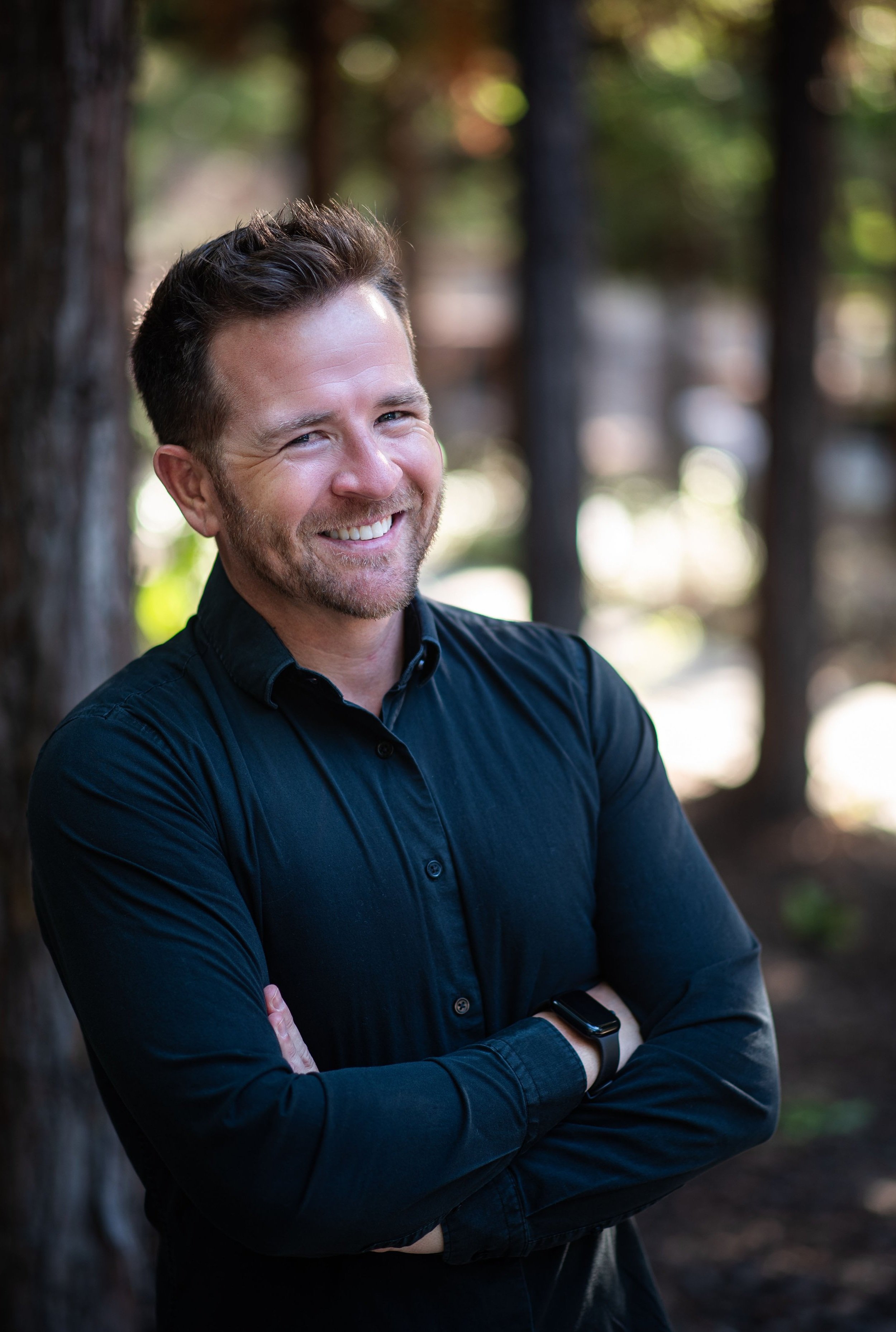
Wes Love
Founding Partner
